Art Chateau Chateau De Versailles Sex Lies and the Guillotine
"When everyone else is losing their heads, it is of import to keep yours." — Marie Antoinette
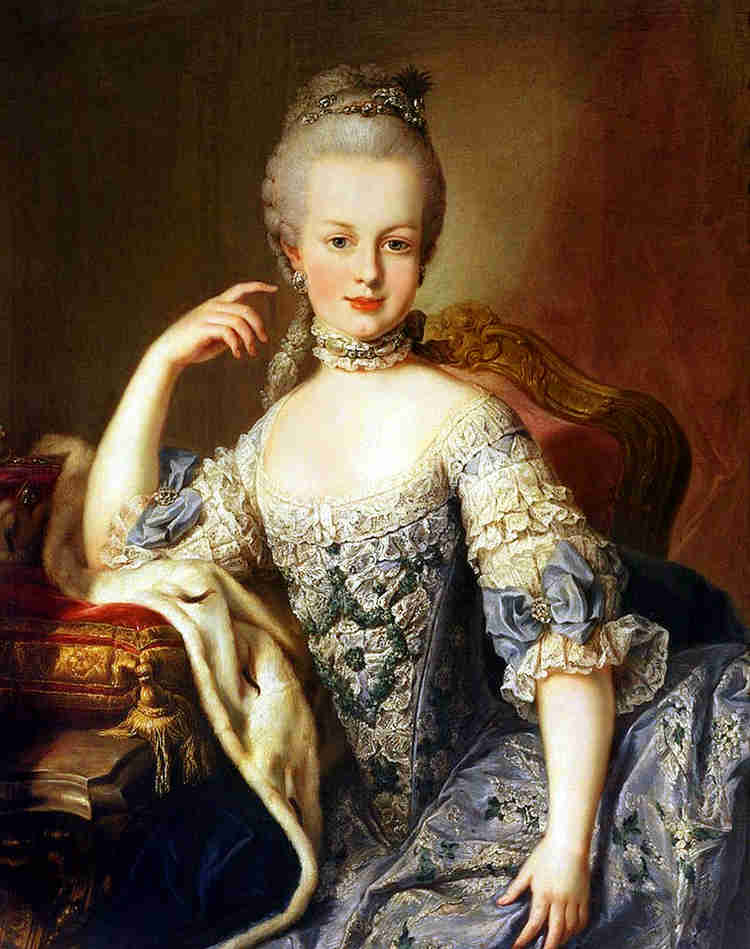
Fascinated with Queen Marie Antoinette? Here'due south my guide to the Marie Antoinette Trail in Paris. It gives you an overview of her life. And you'll detect all the sites and attractions in Paris that are associated with the infamous queen.
Some of them are in the heart of Paris. Other sites are piece of cake day trips from Paris. They're all fascinating and well worth your fourth dimension.
I used to remember that Marie Antoinette was the instrument of her own failure. A privileged, tone deaf dumb dumb in a pretty dress. And I nevertheless think that to a degree.
For many years, she was a hedonistic, luxury-loving, superficial shopaholic. She did some crazy things. But that'south not all she was.
Marie Antoinette: Scapegoat Queen or Dimwit Hedonist?
Marie Antoinette was likewise a young girl trapped in the viper pit of the French courtroom, bored by a loveless marriage. She was an unintentional and conspicuous celebrity at a crucial fourth dimension in French history. When revolutionary fever was in the air and the exalted notion of absolute monarchy was about to vanish.
In the image wars of the time, Marie Antoinette's reputation was exaggerated and weaponized. In a nasty bit of propaganda, she was relentlessly slut-shamed. She was touted, French flags waving with vicious righteousness, equally the sole crusade of the starvation and poverty of the working class.
A fairy tale life turned into tragedy, Marie Antoinette was guillotined in 1793 on false charges. But she held her caput high during the horrific deed.
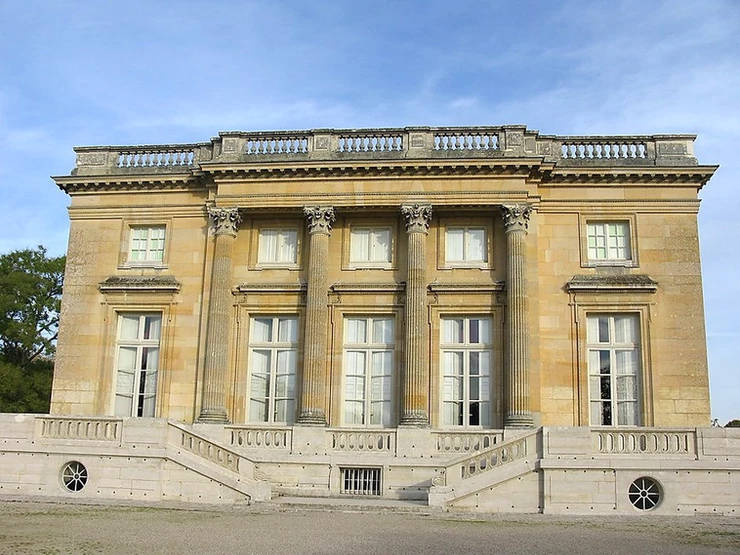
Maybe that's why she fascinates us. Marie Antoinette was full of faults, as are we all. But she was as well manipulated — a victim of unforgivable slander, sexism, and misogyny.
We understand with her plight. Perhaps we're relieved we've escaped such a tragic fate. Or perhaps we oasis't.
In this guide, I give yous a sneak elevation at Marie Antoinette'due south eventful, helter-skelter life in Paris. And I requite you a tour of all the Marie Antoinette sites in and around the capital letter of France.
They're cute and intriguing places. For history or palace lovers, many are must see sights on your Paris itinerary.
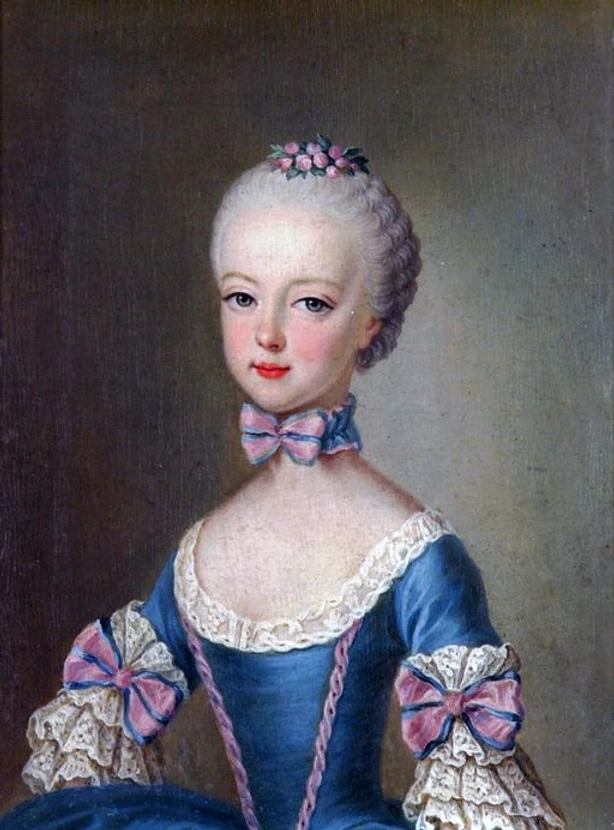
Brusque Biography of Marie Antoinette
Marie Antoinette was born in 1755. She grew upwards in the swishy Schönbrunn Palace, the summer pad of the Hapsburgs. There, she received early on lessons in the ways of the rich and privileged.
READ: iii Day itinerary for Vienna
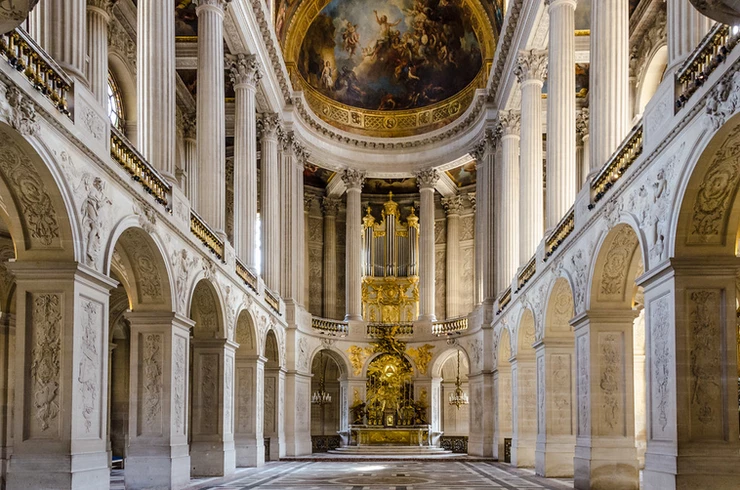
At 14, even so a immature innocent, she was packed off to France to marry the best catch in Europe and heir to the French throne, Louis Auguste, later Louis XVI. They married in the Royal Chapel of Versailles.
1. The Teen Queen
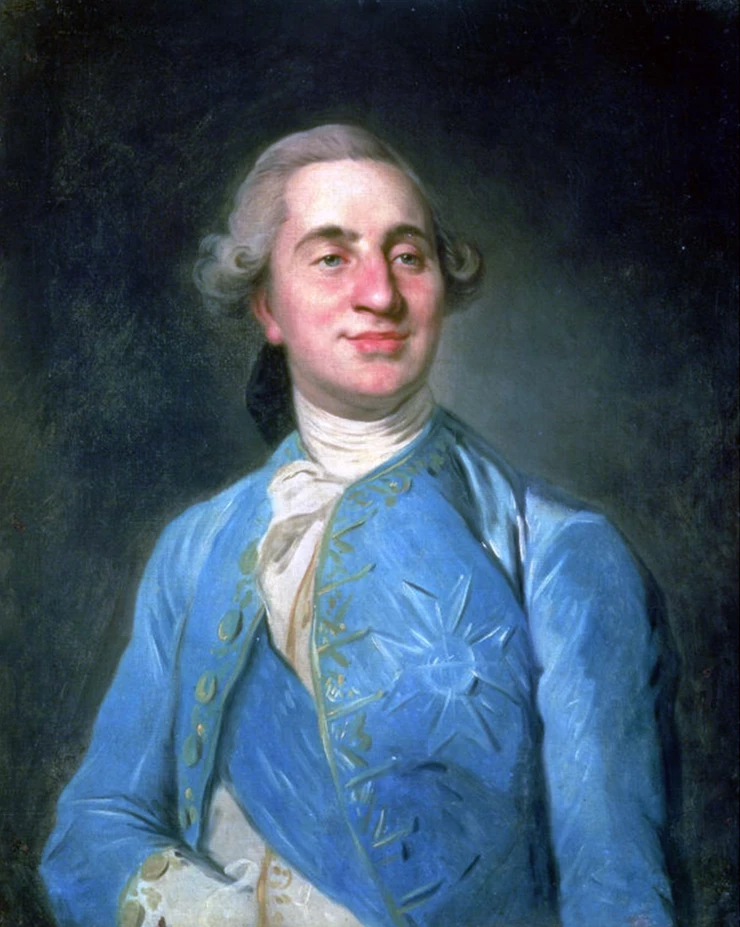
For all her privilege, her troubles started early. Louis wasn't her Prince Charming. In fact, he was her polar opposite. Where she was charming, bubbly, and graceful, Louis was introverted, insecure, and bad-mannered.
Even worse, Louis had psycho-sexual problems. They didn't consummate their marriage for 7 years, a situation which was largely blamed on Marie Antoinette.
The poor girl was also homesick. She was adjusting to the back biting rituals of the French court. Austria was a backwater by comparison.
At first, all was relatively well. People were overjoyed by Marie Antoinette. When she was nineteen, Louis was crowned in Reims Cathedral. Only her ineffectual hubby didn't really want to be rex. He distracted himself from his distasteful royal duties by hunting and ignoring his comely wife.
This didn't sit well with Marie Antoinette. Who would similar it?
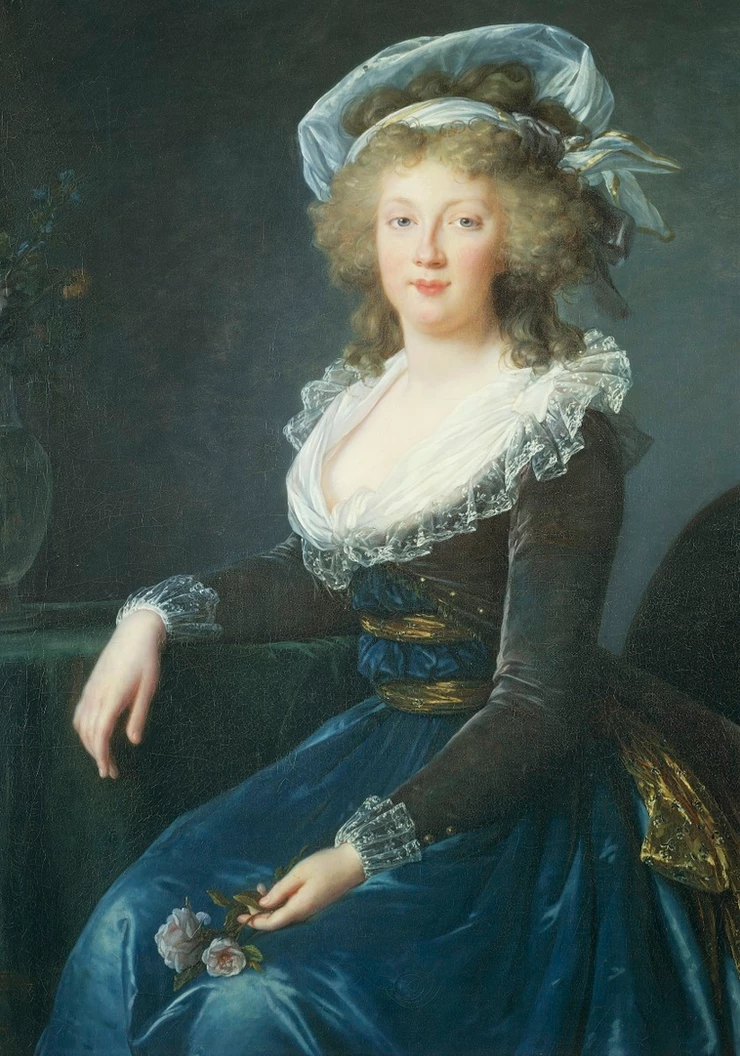
Bored, she looked for something to fill her life. With stars in her optics, she became defenseless upwardly in the pleasures of Paris — masked assurance, the theater, the glamorous Paris Opera scene, and gambling. She became a style icon. Just her new gowns and gambling debts took a toll on the Royal Treasury.
She finally consummated her marriage (with helpful advice from her visiting brother) and had a children (she would accept 4). She also holed up in the Petit Trianon, a small chateau that was Louis' gift to her, to have some much needed alone time. Information technology became a more intimate, parallel court.
Merely a queen was supposed to be 24/7 in the public eye. And so that set the gossips chattering.
ii. The Scandal of the Century: the Thing of the Diamond Necklace
When you're a woman, things you like get used against you. Marie Antoinette's high profile hijinks, runaway spending, gambling debts, and her dearest of the Petit Trianon ignited unwelcome gossip. She was nicknamed "Madame Deficit" for her seemingly devil-may-care greed.
Cloistered in Versailles, Marie Antoinette was rather oblivious to the moniker or its derivation. She had no clue that the vast bulk of French people were feudal peasants, hopes crushed past the male monarch's high taxes, with no social mobility.
Bated from her spending addiction, there were rumors that Marie Antoinette had a long term matter with a Swedish count, Axel de Fersen.
Historians take long debated the nature of their mysterious relationship. At that place'south still dissent, despite some decoding of love letters. Was it a true romance or ideal admiration?
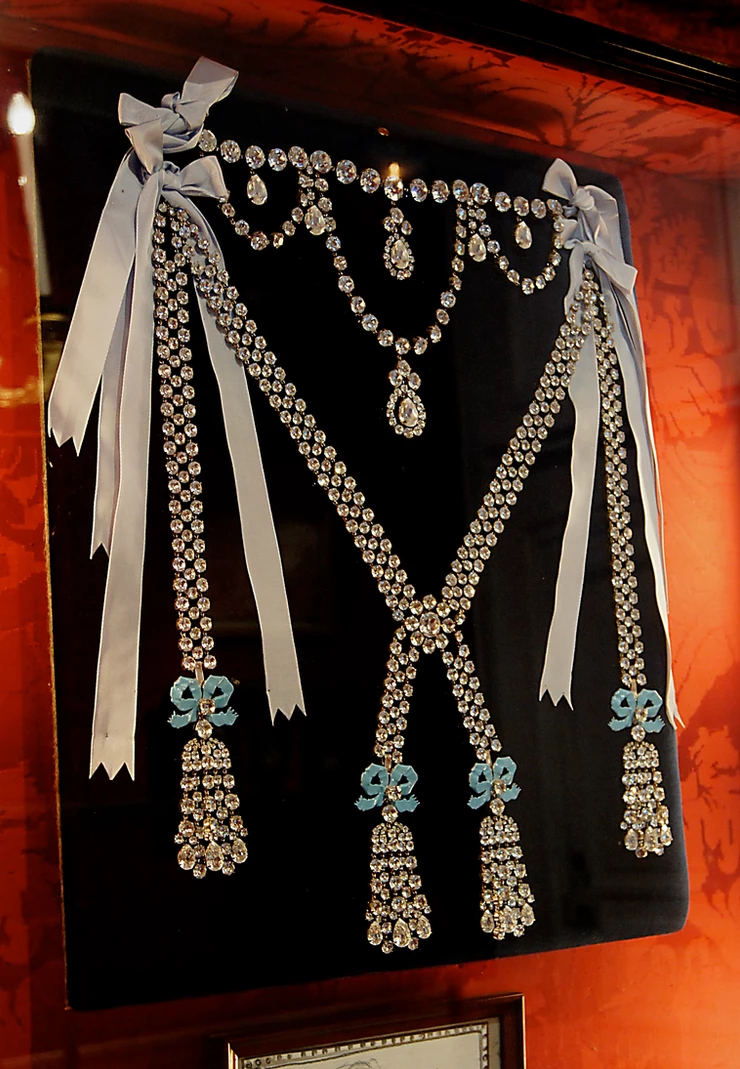
In any result, Marie Antoinette had enemies at court and the situation was rife for wagging tongues and other villains. Enter: the con job of the diamond necklace, a piece of jewelry that Marie Antoinette never wanted and never endemic.
A Paris jeweler created a 2800 carat diamond necklace, a very hideous one in my opinion. He hoped that Louis Fifteen would purchase it for his last mistress, the infamous Madame du Barry.
Louis XV died, and the jewelers appealed to Louis XVI to buy the atrocity. Marie Antoinette refused the necklace, wanting to save the cash for the French navy.
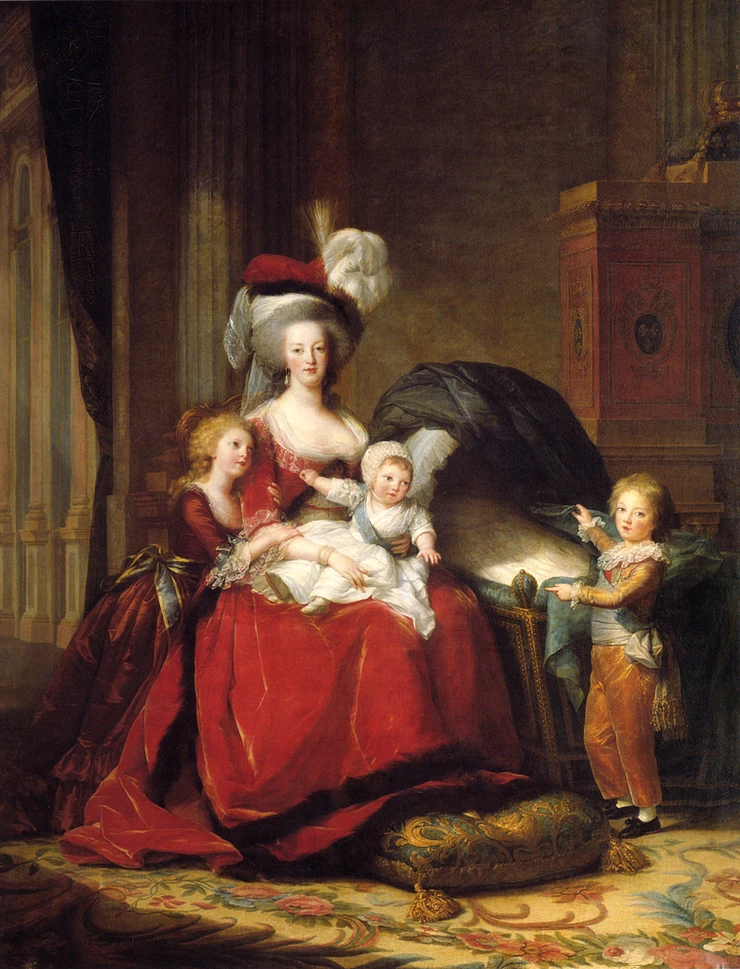
Enter: a swindler, taking advantage of Marie Antoinette's reputation every bit an acquisitive powdered groovy. The con creative person and prostitute Jeanne de Lamotte Valois hatched a plot. She approached an out-of-favor cleric, Cardinal de Rohan, in an evening tete a tete, disguising herself as Marie Antoinette.
LaMotte asked him, very sweetly, to purchase the necklace discretely for her. Wanting to back-scratch favor, the cardinal secured the necklace from the jeweler and handed it to the "queen'due south" footman, LaMotte'southward lover in disguise. The duo fled to London and sold the necklace for parts.
When the first payment came due, there was shock. Marie Antoinette denied whatever knowledge of the exorbitant necklace. Louis XVI was furious. He put the primal on trial. But, in a directly slap in the face up to the queen, the cardinal was acquitted. The necklace forever became known equally "the Queen'due south necklace," a supposed sign of her forehandedness.
iii. The Public Prototype Wars
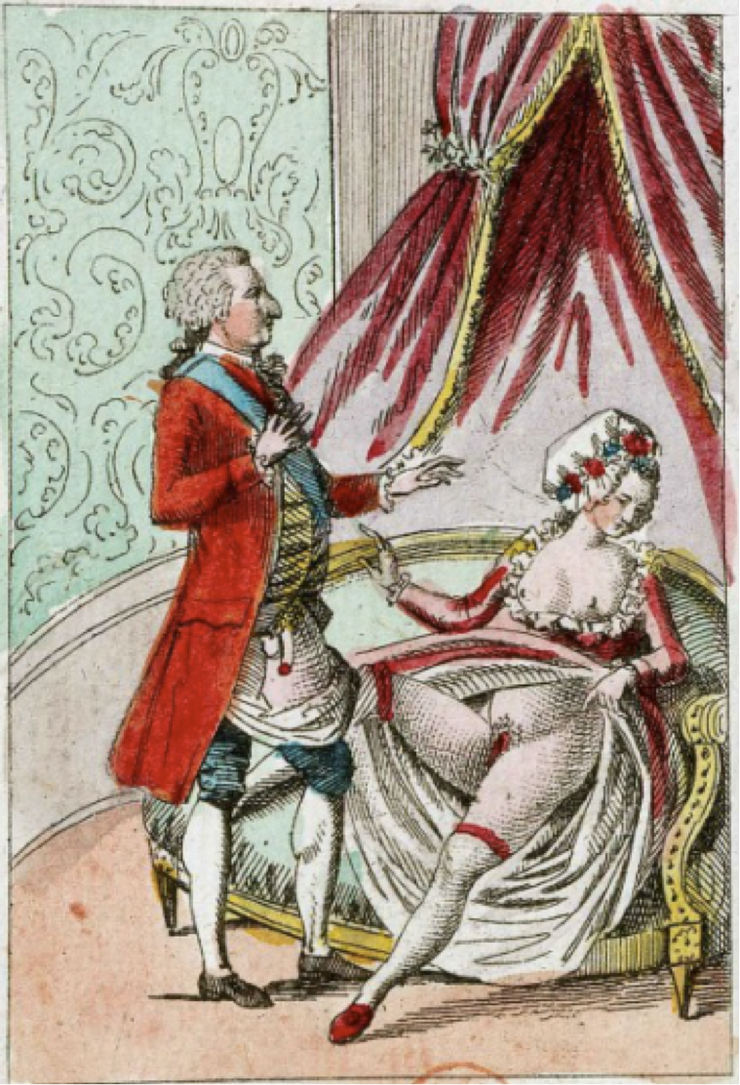
The thing of the diamond necklace simply farther stoked revolutionary zeal and anti-royal sentiment. Marie Antoinette was blamed for France's woes and deliberately targeted. Historian Robert Darnton wrote that the ensuing defamation had "no parallel in the history of vilification."
Marie Antoinette was labeled a wanton slut who had a "fury in her uterus." She was erroneously attributed the famous "permit them eat cake" epithet.
And it wasn't just words.
Gossip was reinforced with printed libel. Smutty cartoons that were finer political pornography were circulated widely. In 1000s of anti-queen pamphlets, Marie Antoinette was graphically illustrated having illicit relations, group sex, and any perversity the revolutionaries could invent.
The bulletin to the masses was that France'south ruin was due to the immoderacy and decadence of a woman. By extension, her villainy reflected poorly on Louis, who was already viewed equally an impotent king, in more ways than i.
It was the revolutionaries' an all out assault on the ancien régime, with Marie Antoinette equally the proverbial sacrificial lamb.
four. Arrest, Trial & Death
Marie Antoinette was now the most hated woman in France. All that was left was to imprison her in a muzzle.
On July fourteen, 1789, the Bastille, a fortress prison in Paris, fell to an angry mob. Marie Antoinette and Louis Sixteen tried to escape to Republic of austria in 1791. But they were caught near the border and taken to Paris.
They were confined in the Tuileries Palace, the imperial residence that in one case formed the western side of the Louvre. (The palace is long gone, but you can yet stroll in the lovely Tuileries Garden.)
For the next 2 years, their presence became the object of revolutionary fury.
The Annunciation of the Rights of Human and of the Citizen was enacted. Still, some architects of the revolution, like Robespierre, Desmoulins, and Danton, were non satisfied. These extreme Jacobins wanted the Ancien Régime utterly eradicated.
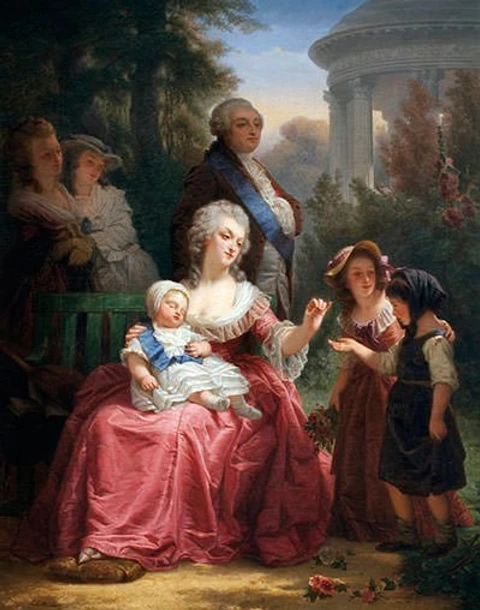
Egged on by Marie Antoinette, Louis 16 refused to accept a constitutional monarchy. He secretly plotted counter-revolution. This was perhaps Marie Antoinette's biggest error and worst flaw. She couldn't let go of the deeply ingrained notion of absolute monarchy. It backfired.
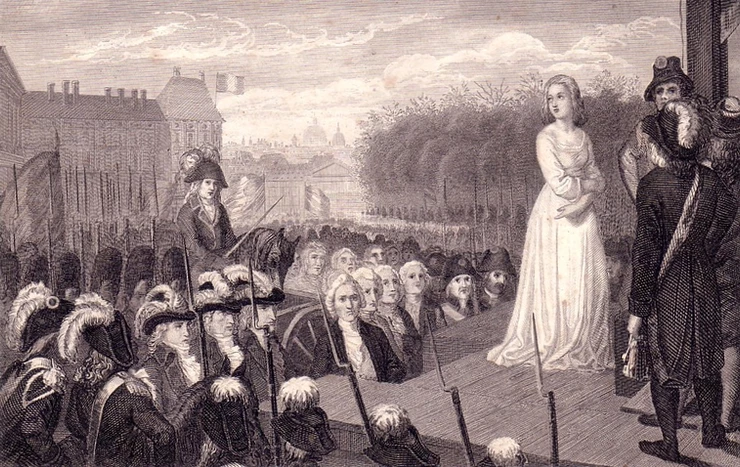
Louis Sixteen was tried for treason and sentenced to the guillotine on January 21, 1793. In August 1793, Marie Antoinette was indicted. The charges read like the libelous pamphlets. She was defendant of treason, adultery, sexual deviancy, and corruption. Even incest with her son.
Pending trial, she was stashed in the Conciergerie for x weeks. It was a gloomy, moldy dungeon. The public would bribe jailers to have a peak at the famous prisoner.
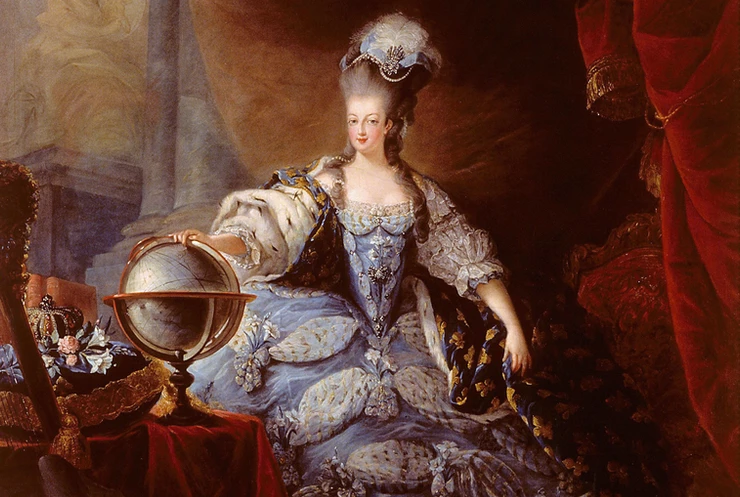
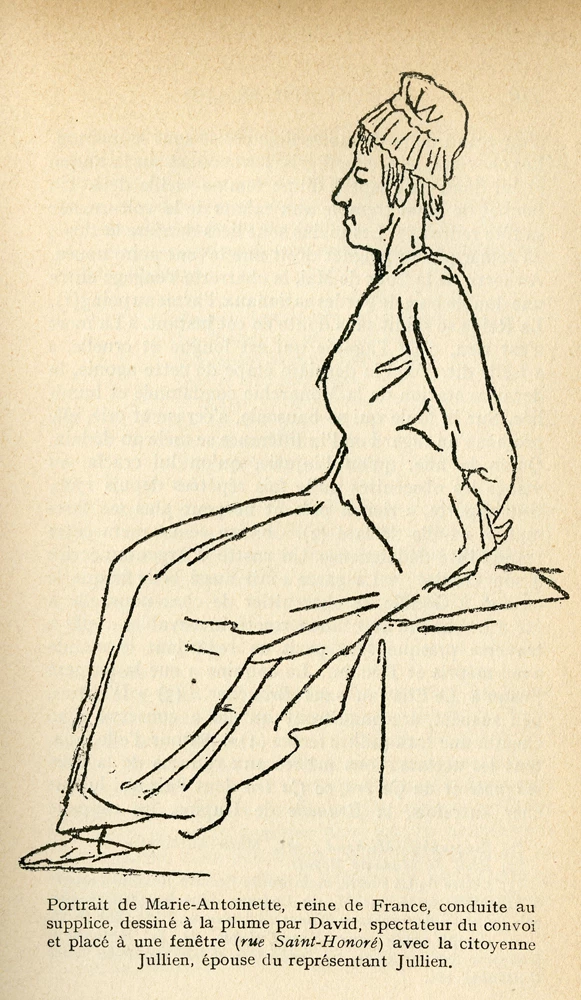
Marie Antoinette'due south testify-trial began in Oct. She was sentenced to decease past guillotine. Her hair was shorn. She was taken to the Place de la Revolution and publicly beheaded.
Marie Antoinette became a symbol of the revolution. Simply she wasn't the cause of the revolution. France was in dire financial straits before her reign. And it's involvement with the American Revolution was expensive and merely sowed a desire for independence at home.
Now, Marie Antoinette is viewed as a complex and dramatic figure in French history. She'due south no longer simply a notoriously decadent queen. She's besides a symbol of someone unjustly accused, whose life was hijacked and manipulated by the patriarchy. The revolutionaries didn't care who she actually was. They just used her to advance their agenda.
Where To Find Marie Antoinette Sites in and Around Paris
Now that you've had the whole celebrated backdrop, are you in the mood to see Marie Antoinette'southward stomping grounds in Paris?
They're incredibly interesting, a testament to her exalted life and her unjustified demise. Here are 8 Marie Antoinette related attractions in Paris.
i. Versailles
I accept to confess, Versailles isn't my favorite place. It'south such a hassle to visit with the mobs of pissy tourists.
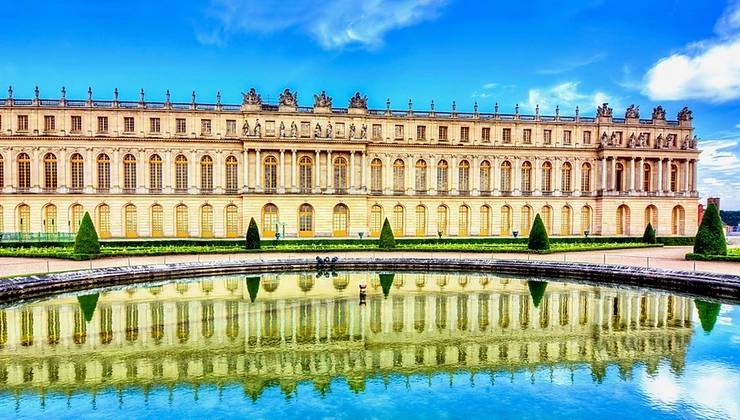
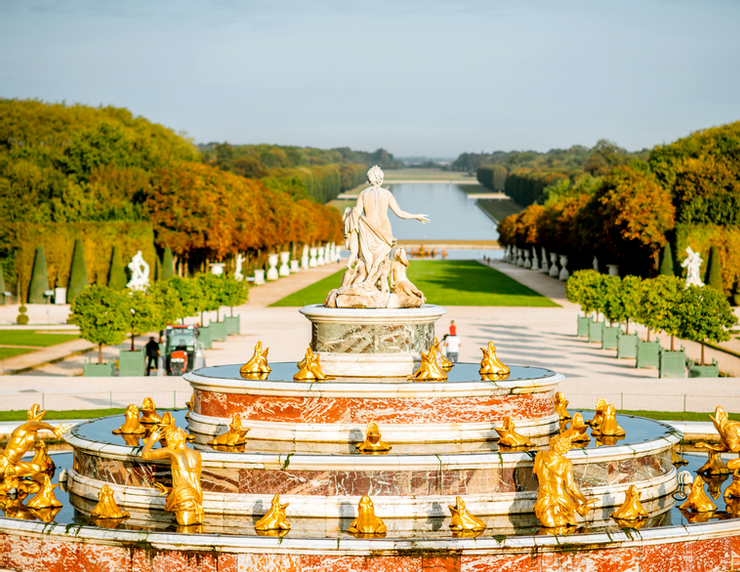
Yes, Versailles is massive, flashy and very, very gold. The opulence is overwhelming. Even the bathrooms are gilded plated.
It reminds me of the role player playing Louis XIV sauntering imperiously around the palace in the Netflix series Versailles and the egregiously poor economic circumstances of the French people, that ultimately sowed the revolution.
You tin can get a guide to Versailles anywhere. I'1000 just going to focus on Marie Antoinette'south association with Versailles. She lived at that place from 1770-89.
The Queen's Apartments consist of the Queen's Chamber, the Nobles' Room, the Royal Tabular array Antechamber, and the Queen's Guard Room. They were recently renovated offset in 2016 and are at present back open to the public.
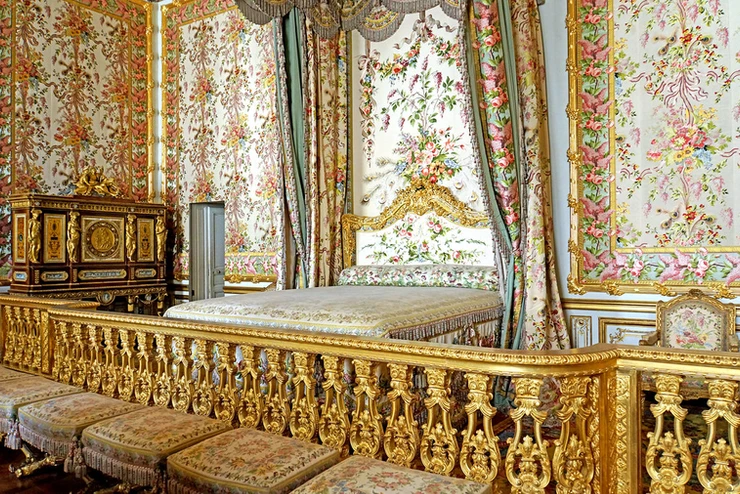
The Queen's Bedroom was non exactly private. Marie Antoinette received her "toilette" there, suffering through a public brandish in accordance with the majestic court's strict etiquette. She greeted friends and visitors at that place besides.
Marie Antoinette also gave birth to her children in her boudoir. Legend holds that the queen nearly suffocated because and so many people pressed in to see her first daughter.
Marie Antoinette hated the next Nobles' Room she inherited. It was decorated in a gaudy Louis XIV manner. She redecorated information technology all, except for the ceiling. Mahogany and dark-green damask were her replacement theme.
Marie Antoinette's Antechamber was used for dining. She and the rex only used it once a calendar week, contrary to prior practice, considering they preferred private dinners. It was restored in 2009-10.
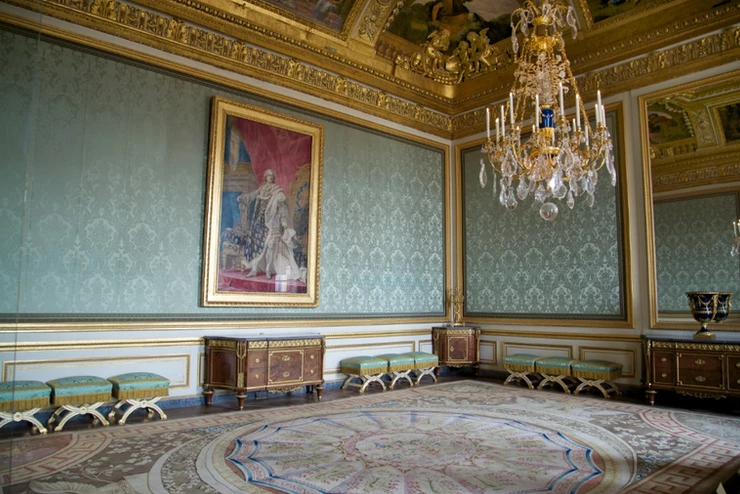
In the Queen'southward Guards Room, 12 guards were on duty day and night, guarding the Marble Staircase and monitoring entry to the Queen's Bedroom. Marie Antoinette never spent fourth dimension here, and so didn't bother to redecorate.
But it was in the Guards Room that she almost met her stop for the showtime time. On October 6, 1789, rioters entered the Queen'southward Chambers. Marie Antoinette escaped to the King'south Apartments. But the rioters put pitchforks through the bed.
Marie Antoinette loved the Gilt Room. She had her trusty architect, Richard Mique, redecorate it for her. It bears her classic wood paneling with imbedded and encrusted flourishes.

Address: Place d'Armes, 78000 Versailles
Hours: Tues to Lord's day nine:30 am to six:30 pm
Tickets & Prices
Getting therdue east: Trains leave from Gare Montparnasse and Gare Saint Lazare in Paris
Website
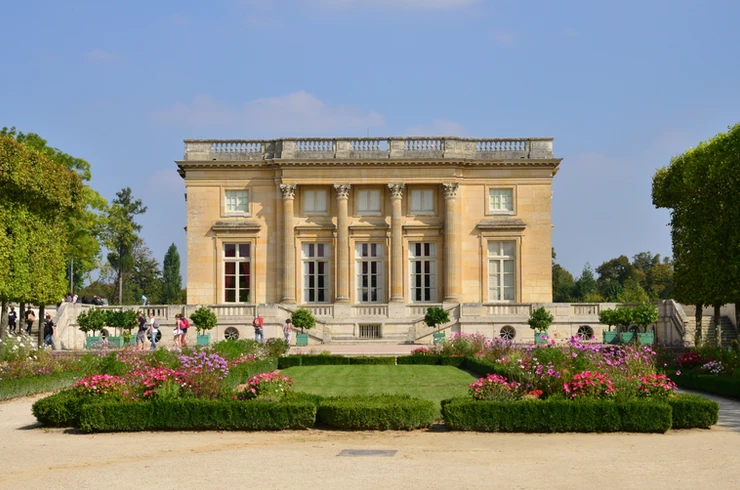
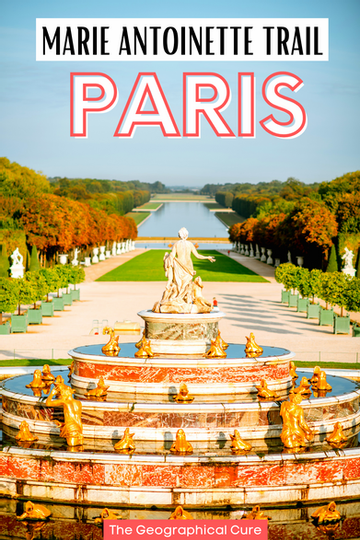
2. Petit Trianon at Versailles: Marie Antoinette's Crash Pad
Afterwards the glitz and opulence of Versailles, the Petit Trianon is a breath of fresh air. Really. Information technology has a sort of discrete charm.
In fact, unless you particularly love palaces, I recommend that yous visit the Petit Trianon and the Hamlet on a day trip from Paris in lieu of the main palace, for a more blissy, crowd costless feel. It'southward much more palatable than trying to conquer Versailles.
Built in 1762-68, the chateau Petite Trianon was originally a gift from Louis XV to his mistress Madame du Barry. When Louis XVI inherited it, he re-gifted it to Marie Antoinette. "This pleasure firm is yours," he told her.
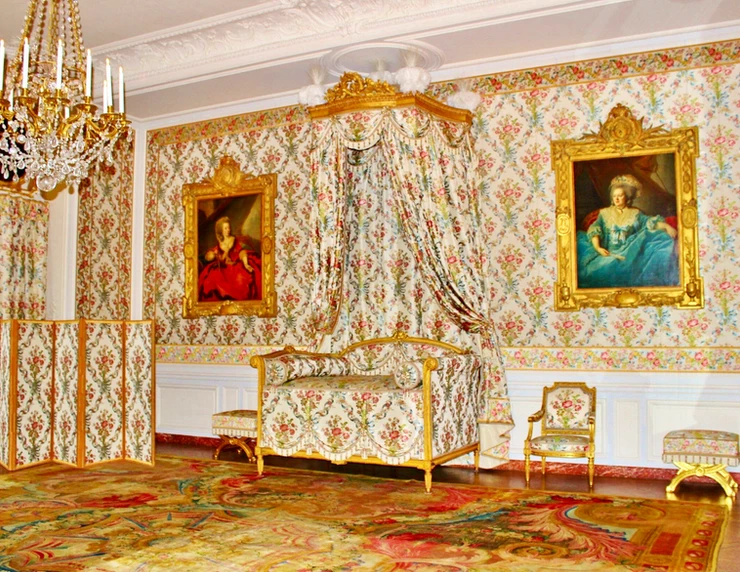
You can feel the spirit of Marie Antoinette at every turn. She said: "When I at Trianon, I am myself." It was here that Marie Antoinette took her geographical cures, escaping from constrained court life.
In culture vulture fashion, she completely redecorated the tiny palace. It bears her distinctive decor and ornamentation — ornate floral motifs run amuk in cornflower blue, lilac, and green. Marie Antoinette didn't want the glitz of Versailles. She wanted a picturesque escape.
In one room, you'll find Marie Antoinette'due south exquisite harp. She wasn't the sharpest knife in the drawer. Simply she was musically gifted, playing well plenty to accompany Antonio Salieri, the Austrian composer and Mozart rival who visited her court.
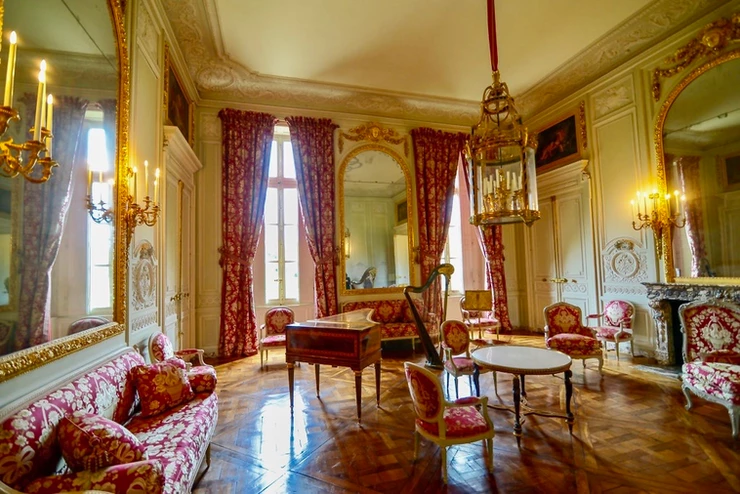
At that place's also Marie Antoinette's infamous pale bluish boudoir with mirrored interior shutters that the queen could raise and lower at will. People imagined mirrors surrounding a bed for secret trysts, but the queen was just trying to dissuade curious optics.
Any trysts at that place were at Petit Trianon did not include Louis. He spent non a single night at the Petit Trianon, and was on invitation but basis. Although he did occasionally pop by to row boats on the swimming.
Accost: Place d'Armes 78000 Versailles Hours: Daily 12:00 pm to 6:30 pm, closed Mondays
Entry: vii.fifty €
Getting there: It's a 20-30 minute walk through the gardens from Versailles.
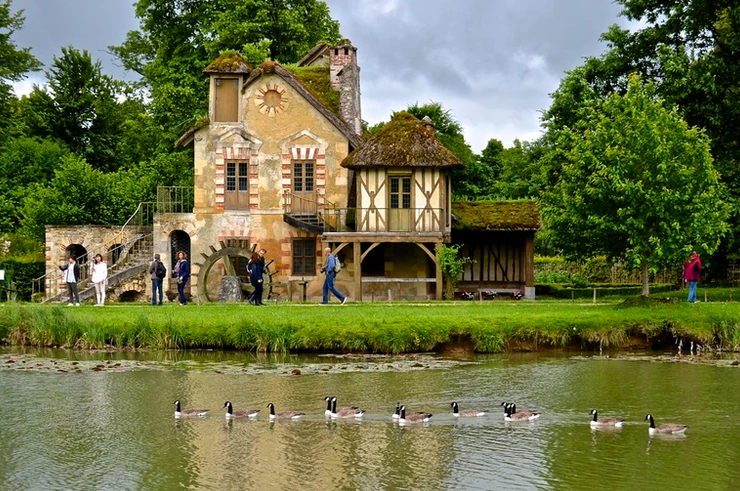
3. The Queen's Village or Hameau de la Reine at Versailles
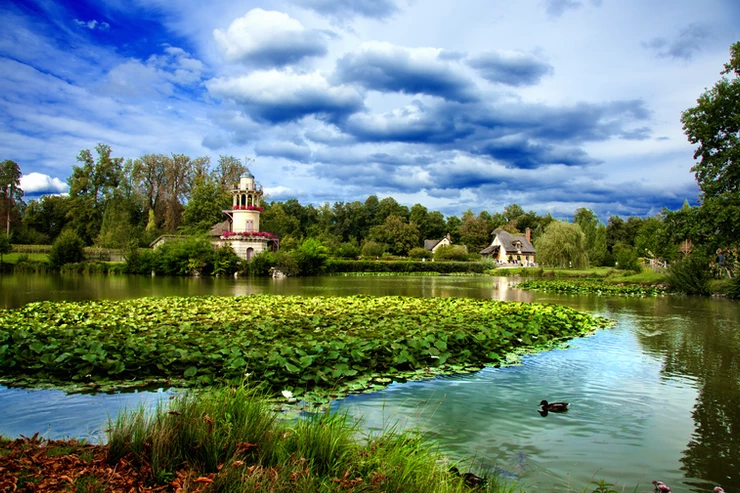
Non content with just the Petit Trianon, Marie Antoinette hired two architects to create a pastoral fantasy for her. On the surface, the resulting Hamlet appeared to be a rural hamlet of crackled tumbledown cottages and wisteria vines. The countryside was fashionable at the time. But within, the cottages were decked out.
Though it does represent the frivolous side of Marie Antoinette, the Disney-esque Hamlet is nonetheless a lovely retreat. Critics say she was "playing" peasant or milkmaid, but that'southward unclear. She may have just enjoyed living and strolling in the bucolic settings with her children.
There are three distinct spaces of the frivolous simply lovely Hamlet.
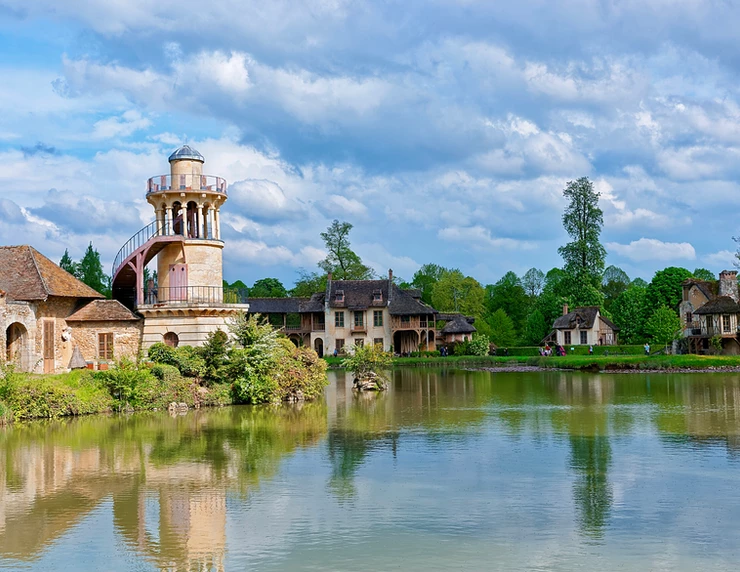
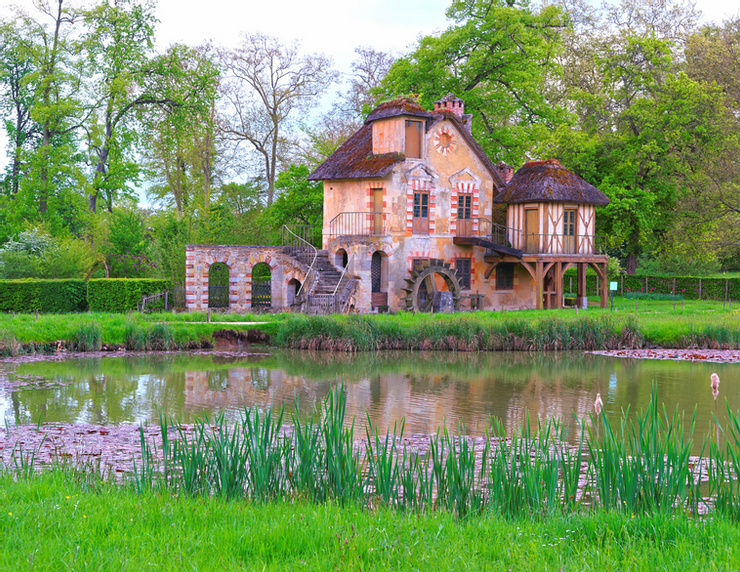
The beginning is the Queen's quarters consisting of cottages whose rustic exteriors concealed fancy interiors. Second, there were the agricultural buildings — the barn, the dairies, the fisherman's cottage, and the guard house.
Third, at that place was the subcontract area, including stables, a hog sty, a sheep pen, and a hen firm. The subcontract was destroyed past Napoleon in 1810-12, but recreated in 2006.
Address: Chateau de Versailles, 78000, Versailles
Hours & Entry
Pro tip: Habiliment good shoes
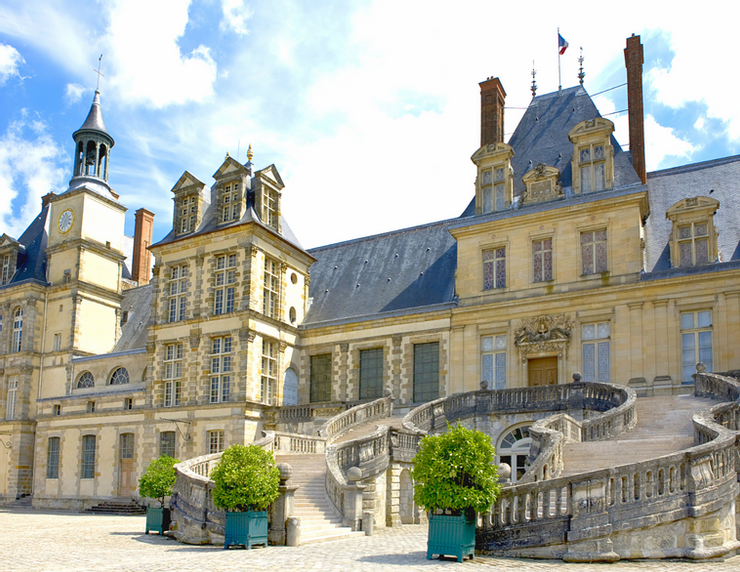
iv. Chateau de Fontainebleau
Less than an 60 minutes from Paris lies the stunning Chateau de Fontainbleau, which is a UNESCO site. To me, Fontainebleau is a vastly more fun day trip from Paris than the over-touristed Versailles.
The chateau boasts 800 years of royal patronage. The NYT calls Fontainbleau "the single greatest assemblage over time of French architecture and décor still in its original land."
Fontainbleau is grand, simply not as coldly opulent as Versailles. Protocol was more relaxed hither. Marie Antoinette enjoyed Fontainbleau. She left her mark on two rooms in the chateau.
READ: Guide To 20 Chateaux in France
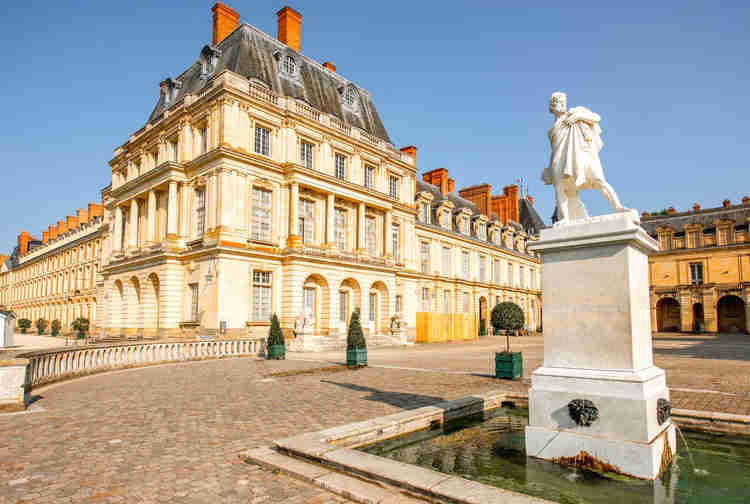

The first is the Turkish boudoir, her private bedroom, built in 1777. It was inspired past the Orient, a decorative fad at the time. Hither, Marie Antoinette would entertain an inner circle of friends, enjoying her private retreat from courtroom life amongst burning incense.
Information technology was recently restored to its original glory. The chateau says the textiles and upholstery were the "work of master goldsmiths." You can only visit the Turkish boudoir on private guided tours.
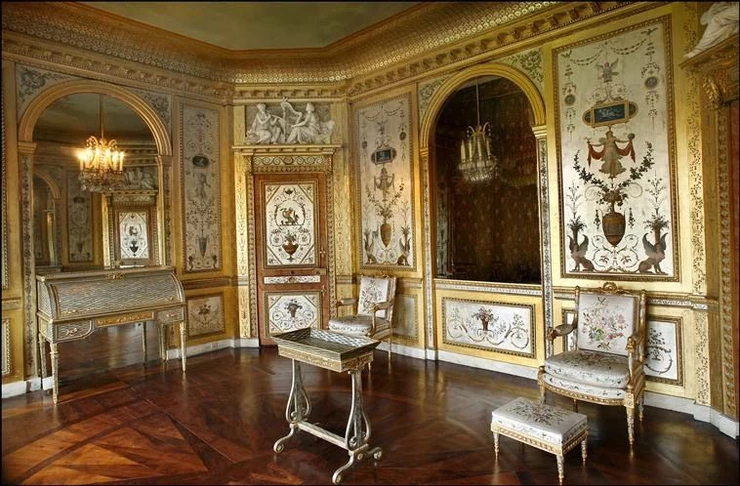
The other private infinite Marie Antoinette created is known as the "silver boudoir." It doesn't accept the exotic style of the Turkish Sleeping room, simply it'south also rich in details.
It has a more than archetype design, with a heavy use of inlaid mother-of-pearl. You lot tin can encounter this room on the self-guided tour of the royal apartments.
Address: 77300 Fontainebleau, France
Hours
Entry fee
Getting at that place
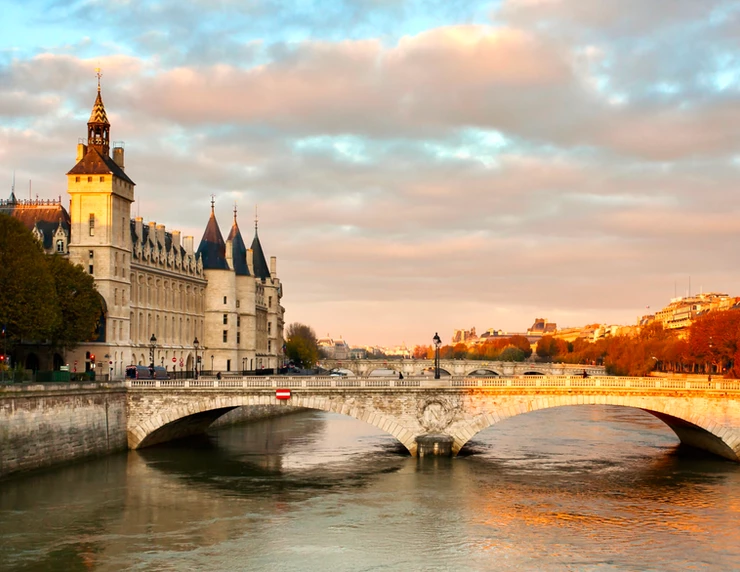
5. La Conciergerie
The Conciergerie fortress was Maire Antoinette's gloomy prison after her arrest. It was built in the 6th century. I think it's one of Paris' hidden gems.
The Conciergerie was the residence of Clovis, the get-go King of France, and used to be a regal palace. Today's version of the Conciergerie dates from 1200.
In the 14th century, the kings and queens of France abandoned the gloomy Gothic palace and decamped for brighter digs. When King Charles V, the terminal purple resident, moved out, he appointed the starting time "Concierge" and renamed the building La Conciergerie.


The Concierge oversaw the police and supervised the prisons. During the Reign of Terror afterwards the revolution, "enemies of the people" were imprisoned without trial and duly "sentenced." The verdict was either innocent or expiry, no murky middle footing.
The Conciergerie became the "antechamber of the guillotine," the last terminate before people were marched to the Place de la Concorde and decapitated. Its stunning and atmospheric vaulted ceiling in the Hall of Soldiers, the Salon des gens d'armes, was declared a UNESCO site in 2006.
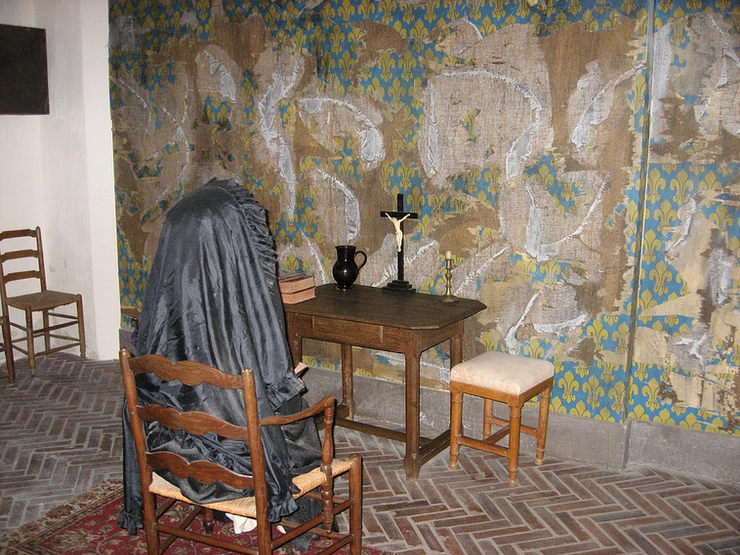
Downstairs, at that place's an exhibit featuring Marie Antoinette, the Conciergerie's nigh famous prisoner. It's decidedly unsatisfying and not "her jail cell."
It's a rather kitschy memorial, a reconstructed staging of her cell with her posed in a long blackness veil. It's non the real deal. The actual cell was demolished and is now an expiatory chapel, then it's been altered every bit well. I wish the actual prison cell had been left intact.
Address: ii boulevard du Palais 75001 Paris
Entry fee: 9 €, under 26: 7 €
Hours: Open up daily, nine:30 am to 6:00 pm
Metro: line one, station Châtelet, line 4, stations Saint-Michel or Cité, lines 7, xi and 14, station Châtelet
Online tickets
vi. Place de la Concorde
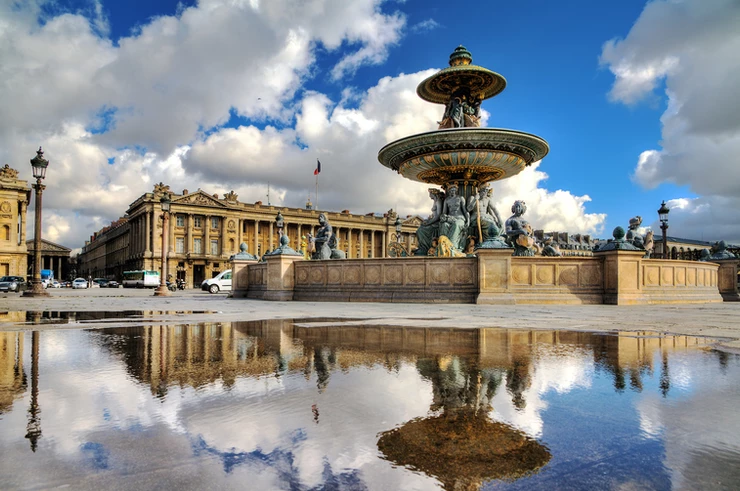
The Place de la Concorde has a sordid history indeed. It'southward the largest square in Paris, located betwixt the Champs-Élysées and the Tuileries Gardens.
But during the revolution, the Place de la Concorde was the home of the blood-stained guillotine. In 1792, revolutionaries tore down the statue of Louis 15 in the square and renamed it the Place de la Revolution.
During the Reign of Terror, Robespierre used the guillotine so frequently, that fable holds that ankle deep claret ran in the foursquare. More than 1200 people were executed at that place.
In 1836, a massive Egyptian obeslisk was placed in the square, a gift to the French government from Egypt. In the 1830s, ii fountains were added. Today, the Place de la Concorde is the finish line for the Tour de France bike race.
7. La Chapelle Expiatoire
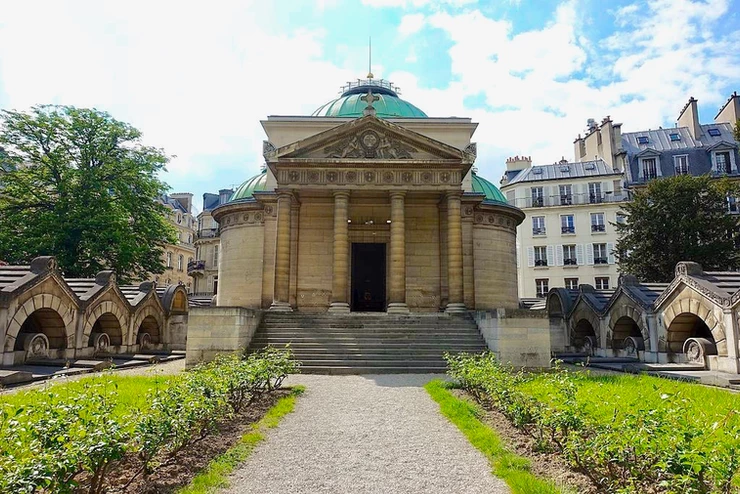
The Expiatory Chapel lies in Paris' 8th arrondissement, in the Foursquare Louis Xvi, off Boulevard Haussmann. Information technology's on the site of a mass graveyard from the French Revolution, where Marie Antoinette's and Louis 16's bodies were unceremoniously thrown after their executions.
In 1814, the monarchy was restored. In 1815, Louis XVIII, Louis XVI's brother, commissioned a chapel. It was erected in memory of Marie Antoinette and Louis XVI.
The chapel was intended to correspond France'south atonement for regicide. In 1914, the chapel was listed as a Historic Monument.
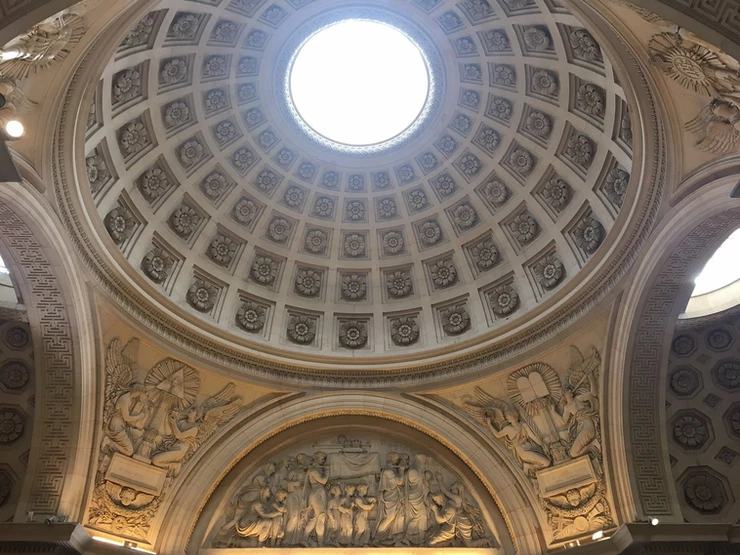
Built by Francoise Leonard Fontaine, the chapel is neo-classical in way. Inside, there are sculptures of the royal couple. Marie Antoinette is shown kneeling to organized religion.
You can too read etched versions of Louis XVI'due south volition and the last letter of the alphabet written past Marie Antoinette, though the latter is of disputed authenticity.
Address: 29 rue Pasquier, 75008 Paris
Hours: Open all year on Thurs, Fri, and Sat from 1:00 pm to 5:00 pm
Entry: Adults 5.5 euros, under 18 free
Pro tip: the chapel is a 10 minute walk from the more famous Église Madeleine
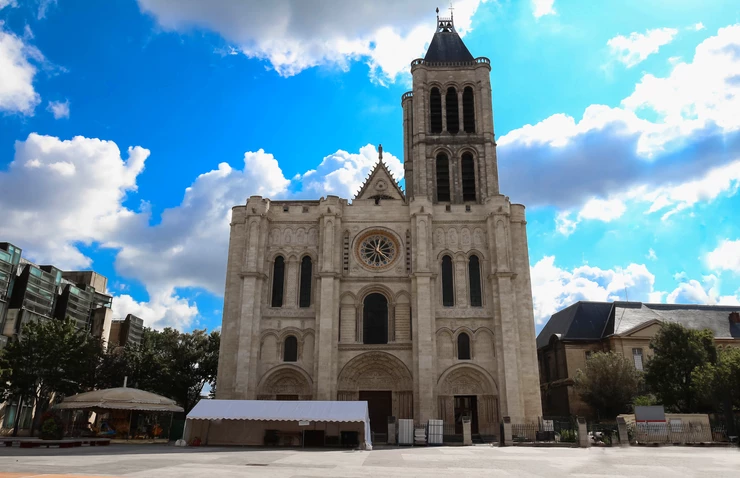
eight. Basilica Cathedral Saint-Denis
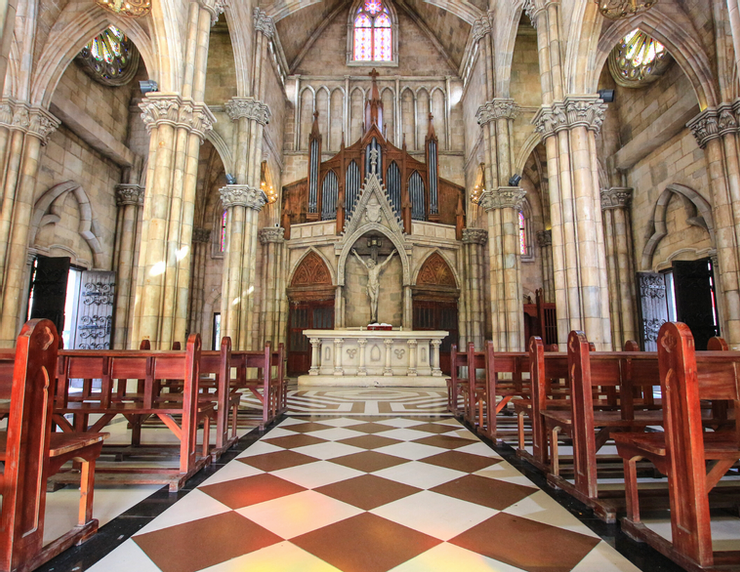
Just outside the Paris city limits lies a completely overlooked subconscious jewel in Paris — the fantastic and sorely underrated Cathedral Basilica de Saint-Denis. It'southward downright amazing that there aren't more than tourists in that location. Really, I don't say this lightly. Information technology's a French national treasure.
Saint-Denis is the birthplace of Gothic architecture. It heralds Europe's transition from a clunky Romanesque manner to a more elegant Gothic one. It's 1 of the most historic and religiously important buildings in Paris.
Saint-Denis is the preferred burial site of French royalty, showcasing the death styles of the rich and famous.
Information technology'south a museum of monumental French religious sculpture. More importantly, it holds the funeral effigies of Marie Antoinette and Lousis Sixteen. They were commissioned by Louis XVIII in 1815, no doubt to put an exclamation point on the Bourbon Restoration.
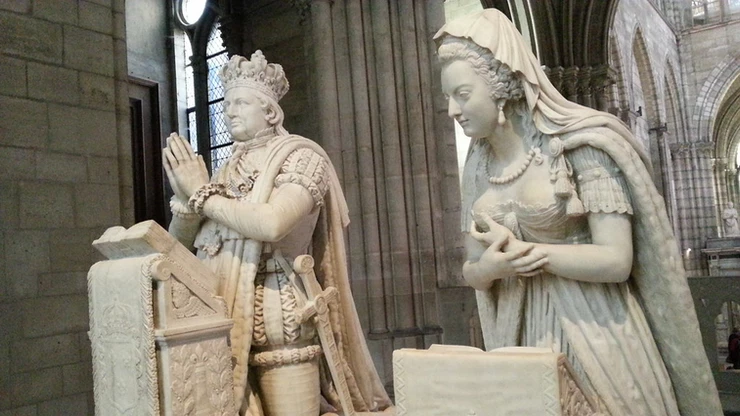
The effigies are supposed to be quasi likenesses. Marie Antoinette's face appears like to contemporaneous portraits. But her pilus is way too curly and her wearing apparel is from the 19th century. She seems to exist leaning toward her husband, signaling the closeness of their marriage in its later years.
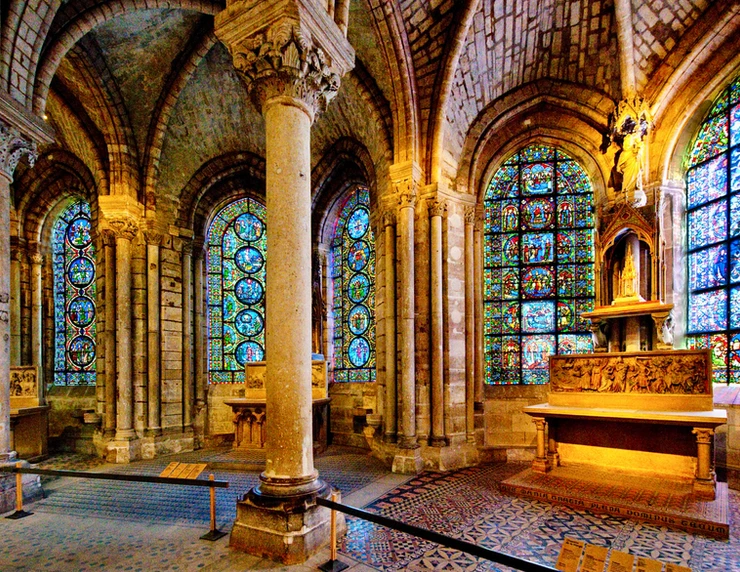
When you're done with the primary nave of Saint-Denis, venture into the dimly lit Romanesque catacomb. Parts of the catacomb survives from the 8th century. Yous'll find the tombs of St. Denis (perchance) and the Bourbon Chapel.
The Bourbon Chapel is open to the public. It holds the remains of the kings and queens that were tossed into the open cemetery during the revolution. With few exceptions, the bodies couldn't exist identified. They were placed in an ossuary, which is marked by a black plate in the crypt.
Address: 1 rue de la Legion D Honneur, 93200 Saint-Denis, France
Hours: Open Apr 1 to Sept 30: Mon to Sabbatum from ten:00 am to 6:15 pm & Sun from apex to 6:fifteen pm. From Oct i to Mar 31: Mon to Sat from 10:00 am to five:xv pm & Sun apex to 5:15 pm
Entry fee: Entry to the main nave is gratuitous. Access to the tombs and crypt is adults ix €, under 26 seven €, under 18 years 3 €, audioguide, 4.50 €
Metro: Gare Saint-Lazare and the Champs-Élysées
Pro tip: It'due south cold within, fifty-fifty in the summer.
I hope you've enjoyed my guide to Marie Antoinette and her sites in Paris. Though vilified, she ultimately decided that there was more to life than big hair and diamonds. Re-tracing her steps in Paris is a romantic try, fatigued from a romantic and compelling historical fourth dimension.
Y'all may enjoy these other Paris travel guides and resource:
5 day itinerary for Paris
Guide To Montmartre
Guide to the Latin Quarter
Guide to the Opera District
Underrated Masterpieces at the Louvre
Tourist Traps To Avoid in Paris
Best Museums in Paris
Monet Guide to Paris
Louvre Survival Tips
If you'd like to follow the Marie Antoinette Trail in Paris, pin it for later.

Source: https://www.thegeographicalcure.com/post/marie-antoinette-sites-in-and-around-paris
0 Response to "Art Chateau Chateau De Versailles Sex Lies and the Guillotine"
ارسال یک نظر